The short answer: If you hear light, quick scurrying at night and find droppings about the size of a grain of rice, you most likely have mice in the attic. Heavier thumping or dragging sounds, droppings about half an inch long or larger, and greasy rub marks along rafters or wires point to rats, usually roof rats, which climb trees and utility lines to reach the roofline. If the noise happens mostly at dawn and dusk rather than overnight, it may be a squirrel instead.
Knowing which one you have matters, because mice, roof rats and Norway rats get in, nest and respond to traps differently. This guide walks you through the clues, how to clean up safely, and where to look for entry points in a Grand Strand home before cooler weather pushes more rodents indoors.
Mice vs. Roof Rats vs. Norway Rats: Side-by-Side
Three rodents cause most indoor problems in coastal South Carolina. Here is how they compare when the evidence is in your attic:
| Clue | House mouse | Roof rat | Norway rat |
|---|---|---|---|
| Size | Small and slender, about the size of your palm with the tail | Sleek and agile; tail longer than head and body combined | Large and stocky; tail shorter than head and body |
| Droppings | About 1/4 inch, like a grain of rice | About 1/2 inch | About 1/2 to 3/4 inch, thick and capsule-shaped |
| Where it nests | Wall voids, insulation, stored boxes | High spaces: attics, soffits, ceiling voids | Low spaces: burrows along the foundation, crawl spaces, under debris |
| How it gets up high | Climbs inside walls and along pipes | Excellent climber; runs along tree limbs, fences and power lines | Rarely climbs to the attic; usually found at ground level |
| Smallest gap it needs | About 1/4 inch, the width of a pencil | Slightly larger than a mouse | Slightly larger than a mouse |
| Trap behavior | Curious, often investigates new objects | Cautious of new objects near its runways | Cautious of new objects |
A Norway rat can end up in an attic, but it is unusual. If the evidence is mostly overhead, think mouse or roof rat first. If you are finding burrows along the foundation or droppings in the crawl space, a Norway rat is more likely.
Clues in Your Attic: Sounds, Droppings and Damage
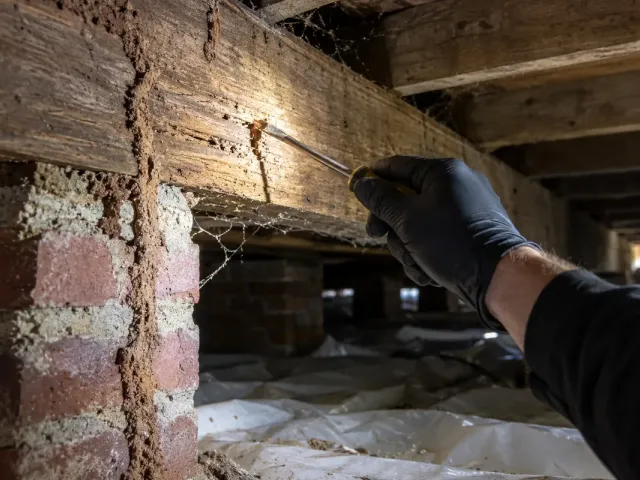
You rarely see the animal itself, so the evidence it leaves is what tells the story. With a flashlight and a dust mask, check the attic for these signs:
- Sounds. Mice make light, fast pitter-patter and faint scratching. Rats sound heavier, with thumps, gnawing and the occasional sound of something being dragged. Both are most active after dark.
- Droppings. Size is the most reliable clue. Rice-grain droppings scattered along a path usually mean mice. Droppings half an inch or longer, often in piles along a joist or near the eaves, usually mean rats.
- Rub marks. Rats leave dark, greasy smudges where their fur touches rafters, beams and the edges of openings. Mice leave fainter marks.
- Runways and nests. Look for flattened tunnels in blown-in or batt insulation and nests of shredded insulation, paper or fabric in corners and along the eaves.
- Gnawing. Fresh chew marks look pale and sharp-edged. Check wiring, ductwork, stored boxes and the wood around vents and soffits. Gnawed wiring is a fire risk, so have an electrician look at any damage you find.
- Odor. A strong musty or ammonia smell in one area usually means a nest or a latrine spot is nearby.
If you find fresh droppings in more than one area, or droppings of different sizes, the problem is likely established rather than a single visitor.
Could It Be a Squirrel Instead?
Not every attic noise is a rodent. Squirrels are active during the day, so noise that starts at sunrise and again before sunset, with quiet overnight, points to a squirrel. Squirrels also leave larger, visible entry holes, often at a roof corner, gable vent or fascia board, and their droppings are larger and rounder than rat droppings.
Raccoons and other wildlife are louder still and can cause heavy damage to vents and insulation. If the signs point to wildlife rather than mice or rats, the removal may need a wildlife specialist; a pest control technician can help you confirm which animal you are dealing with.
How to Clean Up Droppings Safely
Rodent urine and droppings can carry diseases, and the biggest risk comes from breathing dust stirred up during cleanup. The CDC’s guidance on cleaning up after rodents recommends this routine:
- Ventilate first. Open doors and windows, or the attic hatch and vents, for at least 30 minutes before you start.
- Protect your hands. Wear rubber or plastic gloves the whole time.
- Do not sweep or vacuum. Sweeping or vacuuming dry droppings can put contaminated particles into the air.
- Soak it. Spray droppings, urine and nesting material with a bleach solution (1.5 cups of household bleach per gallon of water) or an EPA-registered disinfectant until very wet, and let it sit for 5 minutes or as long as the label says.
- Wipe and bag. Pick up the material with paper towels, seal it in a bag and put it in a covered trash can.
- Disinfect and wash. Mop or wipe the area with disinfectant, then remove your gloves and wash your hands thoroughly.
Clean up after the rodents are gone, not before. Cleaning while they are still active only means doing it twice. For heavily soiled insulation or a large infestation, professional help is the safer choice.
Where Rodents Get Into Grand Strand Attics
Coastal homes give rodents a lot to work with: mature live oaks and palms that brush the roofline, heavy vegetation, and humid crawl spaces. Roof rats in particular travel along branches, fences and utility lines, so openings high on the house matter as much as those near the ground.
According to the CDC’s guide to sealing rodent entry points, a mouse can fit through a hole the width of a pencil, about 1/4 inch. Walk the outside of your home and check:
- Roofline: gaps where the roof meets the fascia, soffit returns, and damaged or loose soffit panels.
- Vents: gable, ridge, attic and crawl space vents with torn or missing screens.
- Utility penetrations: holes around electrical, cable, plumbing, gas and HVAC lines.
- Doors and garage: worn weather stripping and gaps at the garage door corners.
- Trees and shrubs: limbs touching or hanging over the roof. UC IPM’s rat guide recommends removing overhanging limbs within 6 feet of the roof and keeping dense plants about 2 feet away from the house.
Fill small holes with steel wool held in place with caulk, and cover larger openings with hardware cloth or metal flashing. Rodents can chew through foam, plastic and wood alone. Because rodents look for warmth and food as the weather cools, early fall is a good time to do this check. If you would rather have it done as part of ongoing protection, our residential pest control plans cover the whole home.
When to Call a Rodent Professional
Some situations are more than a do-it-yourself job:
- You hear activity or find fresh droppings again after trapping and sealing.
- You find droppings of different sizes, or signs in the attic and the crawl space.
- You see gnawed wiring, damaged ductwork or heavily soiled insulation.
- You cannot find how they are getting in, or the openings are on a second story or the roof.
- Someone in the home is pregnant, very young, elderly or has asthma or a weakened immune system.
Avoid scattering loose poison bait in the attic. A rodent that eats it can die inside a wall or ceiling, where the odor is hard to reach, and loose bait is a hazard for children and pets.
Wilkey Services Pest Management has handled mice and rats in Myrtle Beach and across the Grand Strand since 2010. Our technicians identify which rodent you have, find and seal the entry points, and set a removal plan to keep them out. Learn more about our rodent control in Myrtle Beach, or call (843) 281-0859 to schedule an inspection. Same-day scheduling is available for urgent problems.
Frequently Asked Questions
Can mice and rats live in the attic at the same time?
It is possible, though it is less common. If you find droppings of two clearly different sizes, have the attic inspected, because the two need different trap placement.
Why do I only hear noises in the attic at night?
Mice and rats are mostly nocturnal, so scratching and scurrying after dark is typical. Noise mainly at dawn and dusk is more typical of squirrels.
Will rodents leave the attic on their own?
Rarely. An attic gives them shelter, warmth and nesting material, and both mice and rats breed quickly. Without sealing the entry points and removing the animals, the problem usually grows.
Is it safe to stay in the house with rodents in the attic?
Most families stay home during treatment. Keep people and pets out of the attic, avoid stirring up droppings, and follow safe cleanup steps once the rodents are removed.
Hearing something overhead? Call (843) 281-0859 or Request a Free Estimate and we will find out what is in your attic and how it got in.